OCT-AID-lite brings automated plaque segmentation closer to real-time clinical use
The CARA Lab published OCT-AID-lite, a lightweight AI model enabling fast, near real-time analysis of coronary OCT images.
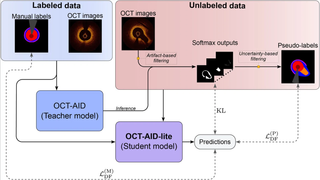
The CARA Lab published OCT-AID-lite, a lightweight AI model enabling fast, near real-time analysis of coronary OCT images.

Dr. Simone Saitta has been awarded an NWO Veni grant for his project on probabilistic digital twins for the anatomical and functional assessment of the coronary arteries.
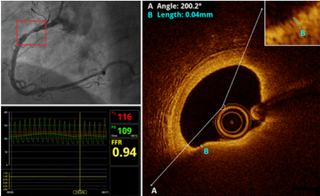
The long-term outcome paper of the observerational PECTUS-obs study has been published in EuroIntervention!
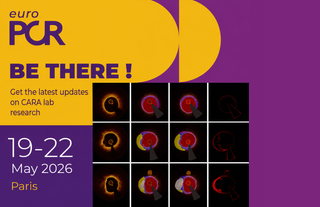
Of course, CARA lab will join this year's edition of EuroPCR conference in Paris! Don't miss our latest updates on our OCT-AID algorithm and high risk plaque analysis!
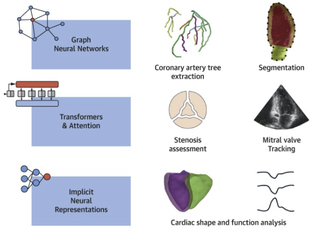
A comprehensive review of advanced deep learning architectures for cardiac image analysis, covering transformers, foundation models, and model compression, has been published in JACC: Cardiovascular Imaging.
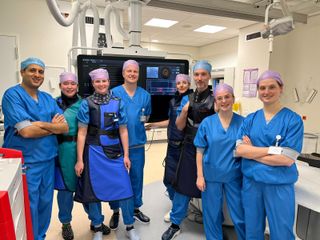
Radboudumc and Abbott have launched Ultreon 3.0 within Radboudumc, the latest software version for intracoronary OCT, featuring automated co-registration, intracoronary physiology, and lipid classification.
The CARA lab will join the American College of Cardiology Conference 2026. Ruben van der Waerden and Rick Volleberg will present our latest work!
CARA Lab invites clinicians in interventional cardiology to share their perspectives on Optical Coherence Tomography (OCT) and the use of Artificial Intelligence in clinical practice.
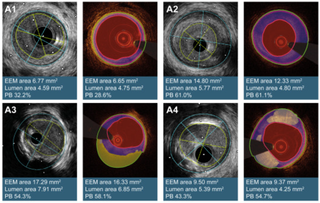
A new CARA Lab study demonstrates that OCT-AID can accurately quantify plaque burden from intracoronary OCT images, showing strong agreement with IVUS measurements.

Two Technical Medicine students, Jasper Lucas and Job Meuwese, have started their graduation projects at CARA Lab.